
new safe work change impacts
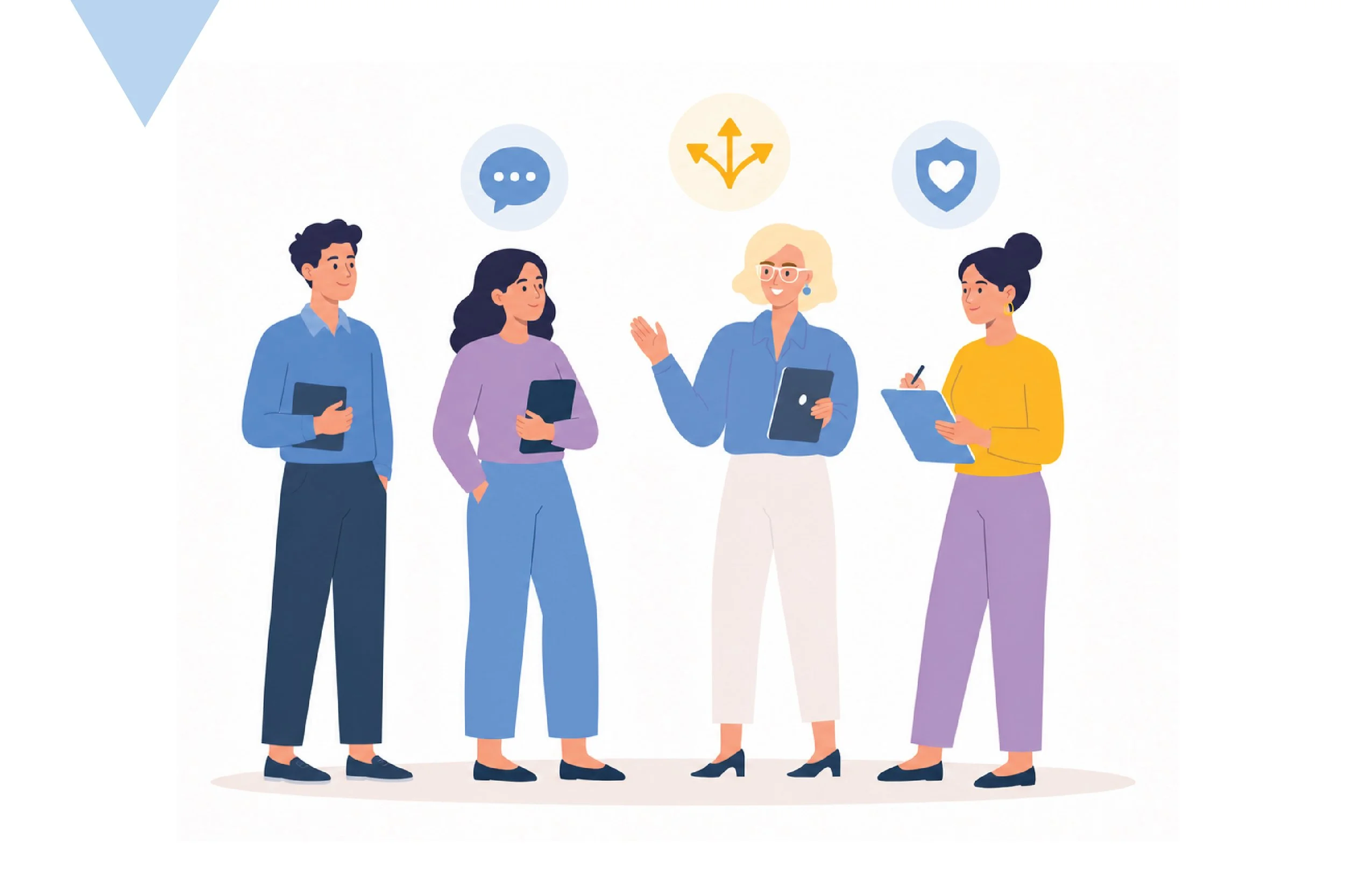
What the New Safe Work Laws Mean for Change
You may have heard lately that Safe work Australia has strengthened the requirements for managing psychosocial risks at work.
But what might this mean for businesses and people planning and leading change?
Under the latest NSW Work Health and Safety Regulation, businesses must now intentionally take a more structured approach to managing psychosocial risks specifically during periods of change. Poor organisational change management is recognised as a psychosocial hazard, which means the way we plan, communicate and support change need to be brought into the WHS conversation.
Working in our field, we often talk about change management is about more than getting people to adopt something new. It is also an important part of managing people risk and building positive workplace culture.
What does poor organisational change management look like?
If we think about the changes happening across workplaces right now:
New technology and AI
Organisational restructures
Changing roles and reporting lines
New processes and ways of working
Workplace moves and redesigns
Increasing workloads and competing priorities
It is immediately clear that we aren’t just asking our people to adopt one of two changes, we are asking them to operate in a constant state of change.
Any change can create uncertainty, confusion, increased pressure and concern for those, especially when they are introduced without enough planning, consultation or support. But as we add more and more change at the same time, we multiple this risk for our people.
Unfortunately, I think many of us have experienced change being managed less than ideally. Poor organisational change management might include:
Communicating after important decisions have already been made
Providing limited opportunities for people to contribute
Overlooking the impact on workloads, roles or responsibilities
Sharing unclear or conflicting information
Introducing several changes without considering their combined impact
Giving leaders limited preparation for conversations with their teams
Providing insufficient training or time to adjust
It is important that psychosocial risk is considered from the beginning of a change, rather than addressed once people are already feeling the impact throughout implementation or adoption.
Solution #1: The Listen Phase:
Consultation is a particularly important. Safe work Australia says it should happen as early as possible when organisations are considering changes like restructures, new reporting arrangements, changes to roles, new technology, different working arrangements or redesigned workplaces.
Genuine consultation means sharing relevant information, giving affected people a reasonable opportunity to express their views and concerns, genuinely considering what is heard during consultation interviews and communicating the outcomes.
And no, this doesn’t mean every decision needs to be made by consensus. It means the knowledge and experiences of your people help inform how the change is designed and implemented.
It is also one of the best ways to understand the practical impacts you may not see from within the project team.
I also believe that creating space to genuinely listen, rather than simply ticking a box, allows people to share information that can be helpful well beyond the scope of the change. When this is done with curiosity and kindness, it can have a wonderful impact on workplace culture.
Solution #2: Change Management needs more than just Comms and Training:
Communication and training will always play an important role in change. However, the strengthened requirements also make it clear that organisations need to consider the design of change itself.
If a change creates unrealistic workloads, unclear responsibilities or conflicting expectations, you might need to reconsider how the work is structured, how quickly the change is introduced, what resources are available and if responsibilities are clear.
The new regulation requires organisations to eliminate psychosocial risks where reasonably practicable. Where this is not possible, they must minimise the risks using the hierarchy of control measures. This places the focus on addressing risks at their source before relying on measures such as information, training or individual coping strategies.
For change leaders, that means we need to ensure we look at both the experience of change and the work people will be expected to perform throughout and afterwards.
Questions To Ask Before Your Next Change:
If you are planning a significant change, it is worth asking:
Have we involved the right people early enough?
Do we understand how roles and workloads will change?
What else is changing for our people?
Are leaders ready to support their teams?
Are our messages clear and consistent?
Do our people have enough time and support to learn?
What psychosocial risks could arise?
How can we reduce risks?
How will we check how the change is landing?
How will we respond to feedback?
We find that these questions can be useful for business leaders, project teams, HR, WHS and change practitioners to explore together.
The Path to Good Change Management and a Safe Workplace:
I am grateful that safe work Australia has brought this conversation to the fore again. I see this as an important opportunity to remember the importance of keeping our people at the centre of any change we are planning.
Good change management helps organisations understand impacts, involve their people, prepare leaders, build capability and notice when more support is needed. The strengthened WHS requirements give us another reason to plan change thoughtfully and make people’s experience a genuine part of the process.
If your organisation has a significant change coming up, now is a good time to review your change approach alongside your psychosocial risk obligations.
You can read more about managing psychosocial hazards in the Safe work Australia Code of Practice.
If you would like support understanding the people impacts, engaging your teams or preparing leaders for the change ahead, please drop us a line for a coffee!