
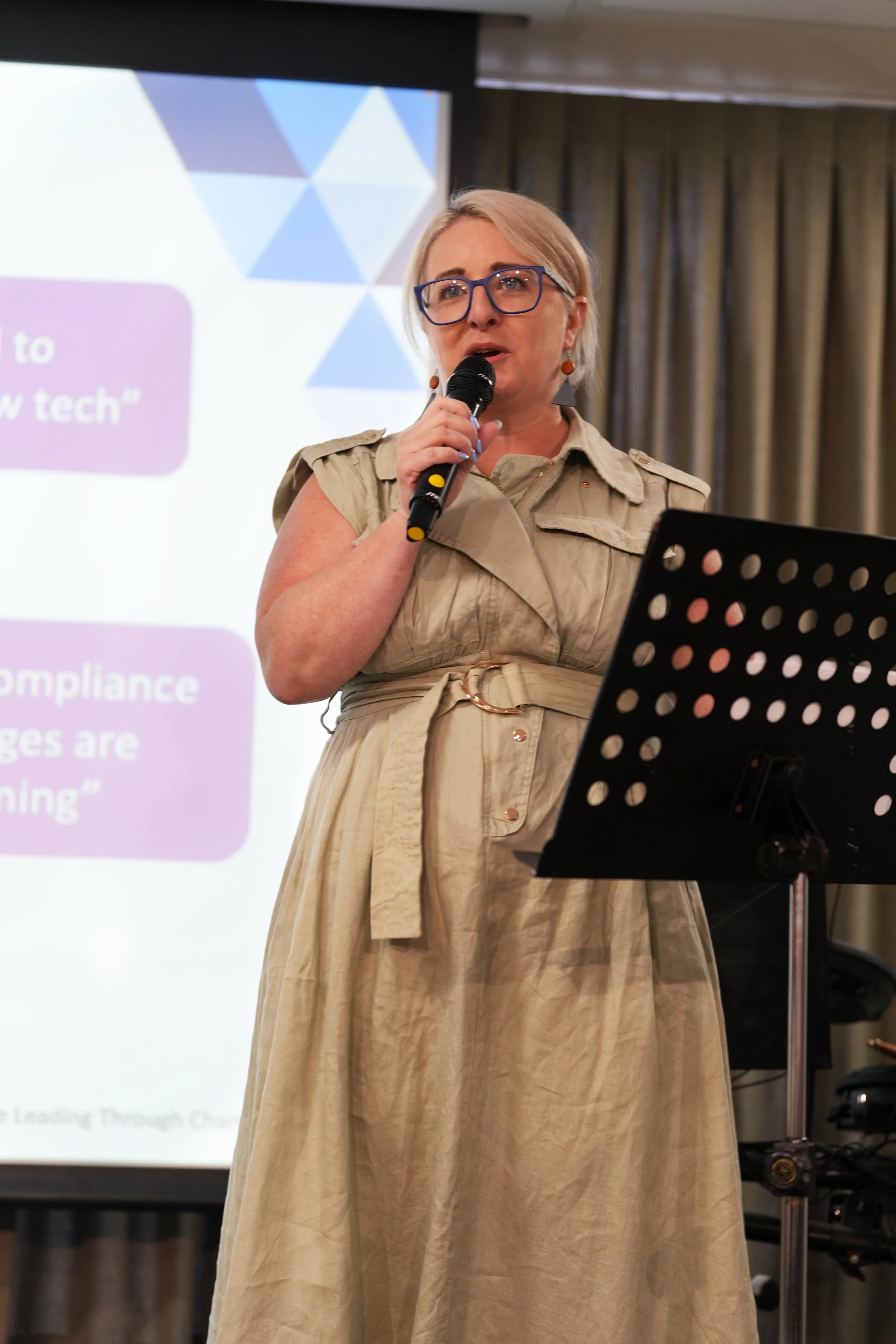
HELLO suncorp!
Thank you for joining me at July Suncorp CCoP!
It was wonderful to connect and talk about change, AI and Accessibility!
I’ve shared the session resources below so you can continue experimenting, building capability, and embedding AI into your everyday change practice!
SUNCORP CCOP:
AI FOR CHANGE
July 2026
This session focused on moving beyond AI hype and into practical application — exploring how change leaders can use AI to save time, improve visibility and insight, and create more space for the human side of change.
Throughout the session, we explored:
practical prompting techniques
AI workspaces and project setups
stakeholder sentiment analysis
drafting change and communications plans
AI-enabled change habits
responsible and secure AI use
ways to embed AI across the change lifecycle
How to use AI to create more accessible change engagements
RESOURCE #1: SUMMARY OF SESSION SLIDES
A practical session handout covering:
prompting frameworks
AI maturity for change managers
AI workspaces
reusable prompts
practical use cases
AI-enabled workflows
examples for change planning, stakeholder engagement, workshops, and adoption tracking
A step-by-step guide to building reusable AI-ready templates for:
change and communications plans
stakeholder analysis
personas
readiness reporting
training plans
resistance management
This guide also includes:
reusable master prompts
guidance for handling missing information
tone and quality instructions
review techniques using the “3 Cs”
practical ways to build your own AI change toolkit